Welcome to DU!
The truly grassroots left-of-center political community where regular people, not algorithms, drive the discussions and set the standards.
Join the community:
Create a free account
Support DU (and get rid of ads!):
Become a Star Member
Latest Breaking News
Editorials & Other Articles
General Discussion
The DU Lounge
All Forums
Issue Forums
Culture Forums
Alliance Forums
Region Forums
Support Forums
Help & Search
American History
Related: About this forum
Jirdes Winther Baxter, 101, Dies; Last Survivor of Epidemic in Alaska
Jirdes Winther Baxter, 101, Dies; Last Survivor of Epidemic in Alaska
An outbreak of diphtheria inspired a celebrated sled dog relay of nearly 700 miles to deliver lifesaving serum to the remote town of Nome.
Jan. 11, 2026

Jirdes Winther Baxter, center, with her brothers Gudmund, left, and John. She survived a diphtheria outbreak in 1925. via Anna Baxter
Jirdes Winther Baxter, the last known survivor of a 1925 diphtheria epidemic in Nome, Alaska, that prompted a legendary sled dog relay of nearly 700 miles that delivered a lifesaving serum to that isolated frontier town, died in Juneau, the capital, on Jan. 5. She was 101. ... Her death, in a hospital, was confirmed by her son Fred J. Baxter.
A copy of medical records from 1925, possessed by Mr. Baxter, a retired lawyer, indicates that Jirdes (pronounced JER-diss) Winther, then 11 months old, was hospitalized in Nome on Jan. 30 with diphtheria and what she later called a high fever. Highly contagious, diphtheria is a dangerous bacterial disease that can clog airways, severely restricting breathing, and damage the heart and kidneys.
Jirdes’s Norwegian-born mother, Ragnhild, and one of her brothers, John, were admitted on Feb. 2. Her father, Johan, and another brother, Gudmund, did not contract the disease.
{missing picture}
Ms. Winther Baxter with her brother John, left, her mother, Ragnhild (Bjerkeli) Winther, and her brother Gudmund. Mrs. Winther suffered long-term effects from her battle with diphtheria.via Anna Baxter
At the time, there was only one doctor, Curtis Welch, in Nome, a gold-rush town of 1,400 inhabitants. After two young children died of diphtheria by mid-January, officials there instituted a quarantine advised by Dr. Welch, who had realized that a pandemic seemed “almost inevitable.” ...He sent alerts, by radio telegram, to other towns in Alaska and pleaded for emergency help from the U.S. Public Health Service. The nearest supply of antitoxin, made from the blood of horses, was at a hospital in Anchorage, 1,000 miles away.
{snip}
An outbreak of diphtheria inspired a celebrated sled dog relay of nearly 700 miles to deliver lifesaving serum to the remote town of Nome.
Jan. 11, 2026
Jirdes Winther Baxter, center, with her brothers Gudmund, left, and John. She survived a diphtheria outbreak in 1925. via Anna Baxter
Jirdes Winther Baxter, the last known survivor of a 1925 diphtheria epidemic in Nome, Alaska, that prompted a legendary sled dog relay of nearly 700 miles that delivered a lifesaving serum to that isolated frontier town, died in Juneau, the capital, on Jan. 5. She was 101. ... Her death, in a hospital, was confirmed by her son Fred J. Baxter.
A copy of medical records from 1925, possessed by Mr. Baxter, a retired lawyer, indicates that Jirdes (pronounced JER-diss) Winther, then 11 months old, was hospitalized in Nome on Jan. 30 with diphtheria and what she later called a high fever. Highly contagious, diphtheria is a dangerous bacterial disease that can clog airways, severely restricting breathing, and damage the heart and kidneys.
Jirdes’s Norwegian-born mother, Ragnhild, and one of her brothers, John, were admitted on Feb. 2. Her father, Johan, and another brother, Gudmund, did not contract the disease.
{missing picture}
Ms. Winther Baxter with her brother John, left, her mother, Ragnhild (Bjerkeli) Winther, and her brother Gudmund. Mrs. Winther suffered long-term effects from her battle with diphtheria.via Anna Baxter
At the time, there was only one doctor, Curtis Welch, in Nome, a gold-rush town of 1,400 inhabitants. After two young children died of diphtheria by mid-January, officials there instituted a quarantine advised by Dr. Welch, who had realized that a pandemic seemed “almost inevitable.” ...He sent alerts, by radio telegram, to other towns in Alaska and pleaded for emergency help from the U.S. Public Health Service. The nearest supply of antitoxin, made from the blood of horses, was at a hospital in Anchorage, 1,000 miles away.
{snip}
Jirdes Winther Baxter, last survivor of 1925 Nome serum run, dies in Juneau at 101
Mark Sabbatini
Jan 6
She moved to Juneau with her family in 1929; was honored by the city as ‘shadow member’ of the municipal council for supporting her husband during his 15 years in office
 /v1/fill/w_1164,h_772,al_c,q_85,usm_0.66_1.00_0.01,enc_avif,quality_auto/b4f3f8_355f899bd37d46d68ae9ecc9a57b331f~mv2.jpg
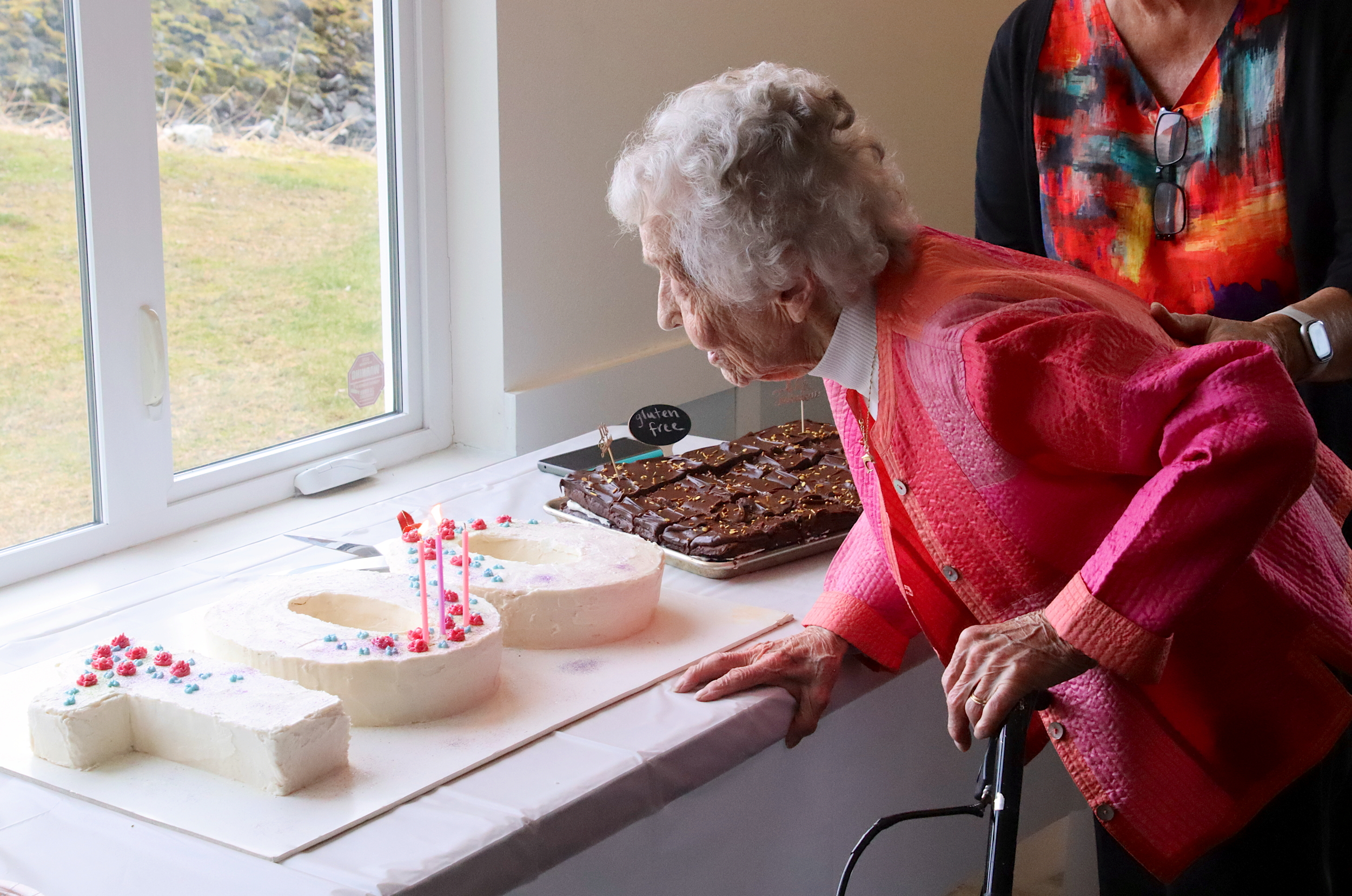
Jirdes Winther Baxter blows out the candles on her cake during her 100th birthday celebration Feb. 24, 2024, at the Juneau Yacht Club. (Mark Sabbatini / Juneau Independent)
By Mark Sabbatini
Juneau Independent
Jirdes Winther Baxter, the last living survivor of the 1925 serum run credited with inspiring the Iditarod Sled Dog Race, died Monday at Bartlett Regional Hospital at the age of 101. ... "This is kind of an end of an era for that period of time," Fred Baxter, one of her sons, said in an interview Tuesday.
His mother, born Jirdes Winther on Feb. 25, 1924, to parents who had moved from Norway to Nome, was hospitalized with diphtheria on Jan. 31, 1925, in the midst of an epidemic of the disease that winter. Only a few days earlier, Nome’s only doctor, Curtis Welch, sent an emergency telegraph to the U.S. Public Health Service requesting 1 million units of diphtheria antitoxin.
That resulted in the famous serum run by 20 mushers and about 150 sled dogs over 674 miles in five and a half days from Nenana to Nome. Jirdes Winther and her two brothers received the last of the existing serum, and their mother the first of the new serum when it arrived at the beginning of February, according to Fred Baxter. ... Jirdes Winther spent another 22 days, including her first birthday, in quarantine.
{snip}
• Contact Mark Sabbatini at editor@juneauindependent.com or (907) 957-2306.
Mark Sabbatini
Jan 6
She moved to Juneau with her family in 1929; was honored by the city as ‘shadow member’ of the municipal council for supporting her husband during his 15 years in office
/v1/fill/w_1164,h_772,al_c,q_85,usm_0.66_1.00_0.01,enc_avif,quality_auto/b4f3f8_355f899bd37d46d68ae9ecc9a57b331f~mv2.jpg
Jirdes Winther Baxter blows out the candles on her cake during her 100th birthday celebration Feb. 24, 2024, at the Juneau Yacht Club. (Mark Sabbatini / Juneau Independent)
By Mark Sabbatini
Juneau Independent
Jirdes Winther Baxter, the last living survivor of the 1925 serum run credited with inspiring the Iditarod Sled Dog Race, died Monday at Bartlett Regional Hospital at the age of 101. ... "This is kind of an end of an era for that period of time," Fred Baxter, one of her sons, said in an interview Tuesday.
His mother, born Jirdes Winther on Feb. 25, 1924, to parents who had moved from Norway to Nome, was hospitalized with diphtheria on Jan. 31, 1925, in the midst of an epidemic of the disease that winter. Only a few days earlier, Nome’s only doctor, Curtis Welch, sent an emergency telegraph to the U.S. Public Health Service requesting 1 million units of diphtheria antitoxin.
That resulted in the famous serum run by 20 mushers and about 150 sled dogs over 674 miles in five and a half days from Nenana to Nome. Jirdes Winther and her two brothers received the last of the existing serum, and their mother the first of the new serum when it arrived at the beginning of February, according to Fred Baxter. ... Jirdes Winther spent another 22 days, including her first birthday, in quarantine.
{snip}
• Contact Mark Sabbatini at editor@juneauindependent.com or (907) 957-2306.